Senior Thesis · Spring 2026
The day will come when you can't be the one to answer. Animus is for that day.
Quietly.
Years from now, someone who loves you will be in a kitchen on a Tuesday afternoon. The song on the radio, the smell of cooking — something will make them want to ask you a question they hadn't thought to ask before.
They'll pick up the phone. They'll ask. And they'll hear the answer in your own voice, using the words you actually wrote, on whatever day you wrote them.

I · The premise
Designing what an interface refuses.
Most “AI memory” products fall into two camps: archives that never speak, or chatbots pretending to be someone they're not. Both miss what people actually want — not I'm still here, but I existed, I thought about you, here's what I'd say.
Animus sits in that gap. An interaction layer over someone's recorded voice and writing, tuned to listen well and refuse to overstep.
Refuses.
II · The problem
First-person, but with twelve red lines.
The hardest design question wasn't technical — it was philosophical. Academic ethics literature on digital afterlife (Stokes, Hollanek) argues for third-person past tense. He said. She used to. It treats the deceased as object, not subject. Safe, but distant.
I went first-person, present tense — but only after putting twelve hard prohibitions and a crisis-detection break-character into the system. The product lives or dies on that boundary holding.

III · Approach
Seven decisions. Each shipped because a simpler version broke.
Voice cloning that improves over time
V1 recorded once at onboarding. The clone was stiff, recognisably synthetic. V2 passively collects every additional minute of owner audio and re-trains the ElevenLabs IVC model — capped at five minutes total. Quality climbs perceptibly across the first month, then the model stops learning.
AI learning opt-out as eleven server gates
Early users said you promised no learning, but the code still learns from me.Hiding a toggle in Settings wasn't enough — every endpoint that collected input had to honor the flag at the server root. Eleven gates. The opt-out is reversible and surgical: it stops new learning without erasing what the model already knows.
Demo account that resets on logout
123@example.com is the public demo. Login pulls from data-seed/demo/ (10 memories, 4 trustees, 3 recipients). Logout atomically restores the seed. Single-session — a new login kicks the old. No pollution across visitors, no manual cleanup, no exposure of real data.
Dissolve animations — animate the body, not the children
Staggered entrance animations replayed on every route change, which felt jittery. I separated two rhythms — sequential reveal on first paint, smooth cross-fade on navigation. The body fades; children don't move.
Twelve prohibitions, seven required behaviors, hard crisis break
The riskiest territory. Twelve hard rules in the system prompt — no I love you, no first-person directives, no invented memory, no reunion fantasy. Seven required behaviors — reflection over advice, silence is valid, Meisner echo, Magic If scaffolding. Crisis detection forces the AI out of character, switches to a neutral voice, and surfaces a 988 resource panel. The Sewell Setzer case was on my mind throughout.
Recipient dual-link path
If an owner sends an invite while alive, the recipient lands on a preview page that says they're building this while still here. If a trustee triggers the deceased state, the recipient gets a different welcome flow — more sober, onboarding-heavy. Same prompts underneath; different ethical framing on top.
Cloudflared tunnel + dynamic public URL
For demos, a start.sh script launches the server, opens a Cloudflare quick tunnel, parses the URL, injects it into .env, restarts, generates a QR. For real use, a named tunnel points at an owned domain. Either way the family-side invite link just works.
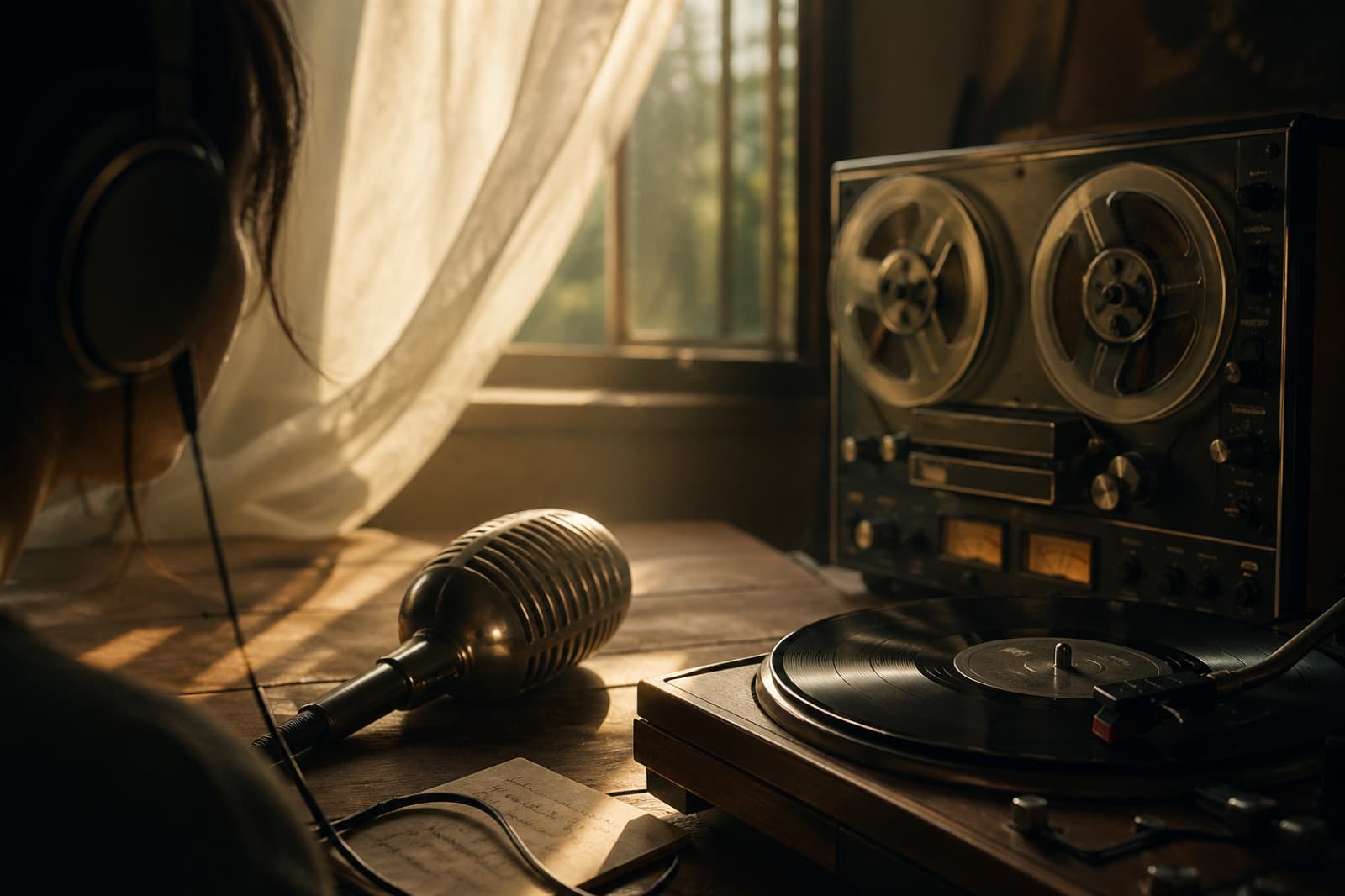
Listens.
IV · Process
Three agents, one editor, and a spec before any prompt.
Solo design and product lead. Implementation distributed across AI agents — Claude as architect, Codex on backend, Gemini on frontend — with formal Plan Review before code and Code Review after. The discipline forced every meaty decision into writing first.
Specs spawned research tracks before they got written. Persona embodiment pulled from Stanislavski's Method acting. Ethics safeguards pulled from grief counseling, continuing-bonds theory, AI crisis intervention, and the public record on Character.AI fatalities. The case for first-person-present-tense was made on paper before a single prompt got written.
V · Outcome
A working prototype with the design problems solved.
Live in private demo. Owner can record memories, train voice, invite recipients. Family-side can chat, listen, browse memories and shared media, escalate to a trustee, surface crisis resources. The twelve prohibitions, seven required behaviors, and crisis break-character are all implemented and tested.
Not yet shipped: production deployment, OS-level cron for retraining (currently setInterval), legal compliance for voice licensing (§3344.1) and pre-mortem consent under RUFADAA. The product is a working prototype with the design problems solved — not a public release.

Try the demo. Quietly.
Sign in with 123@example.com / 123123123. The seed resets on logout — every visitor gets a fresh slate.
There is no hurry. Animus will keep it, until they need it.
References
- Patrick Stokes, Digital Souls: A Philosophy of Online Death (Bloomsbury, 2021).
- Tomasz Hollanek, “Griefbots and the Ethics of Algorithmic Grief” (AI & Society, 2024).
- Constantin Stanislavski, An Actor Prepares; Sanford Meisner, On Acting.
- Reporting on the Sewell Setzer III case (Garcia v. Character Technologies, 2024).
- California Civil Code §3344.1 (right of publicity, post-mortem). RUFADAA model law (revised 2015).
Project
- Live demo · animus.wwwanimus-app.com
- Demo credentials · 123@example.com / 123123123
- Source · Private repository (available on request)
Thesis
- California College of the Arts
- BFA Interaction Design · Spring 2026
- Advisor on request